
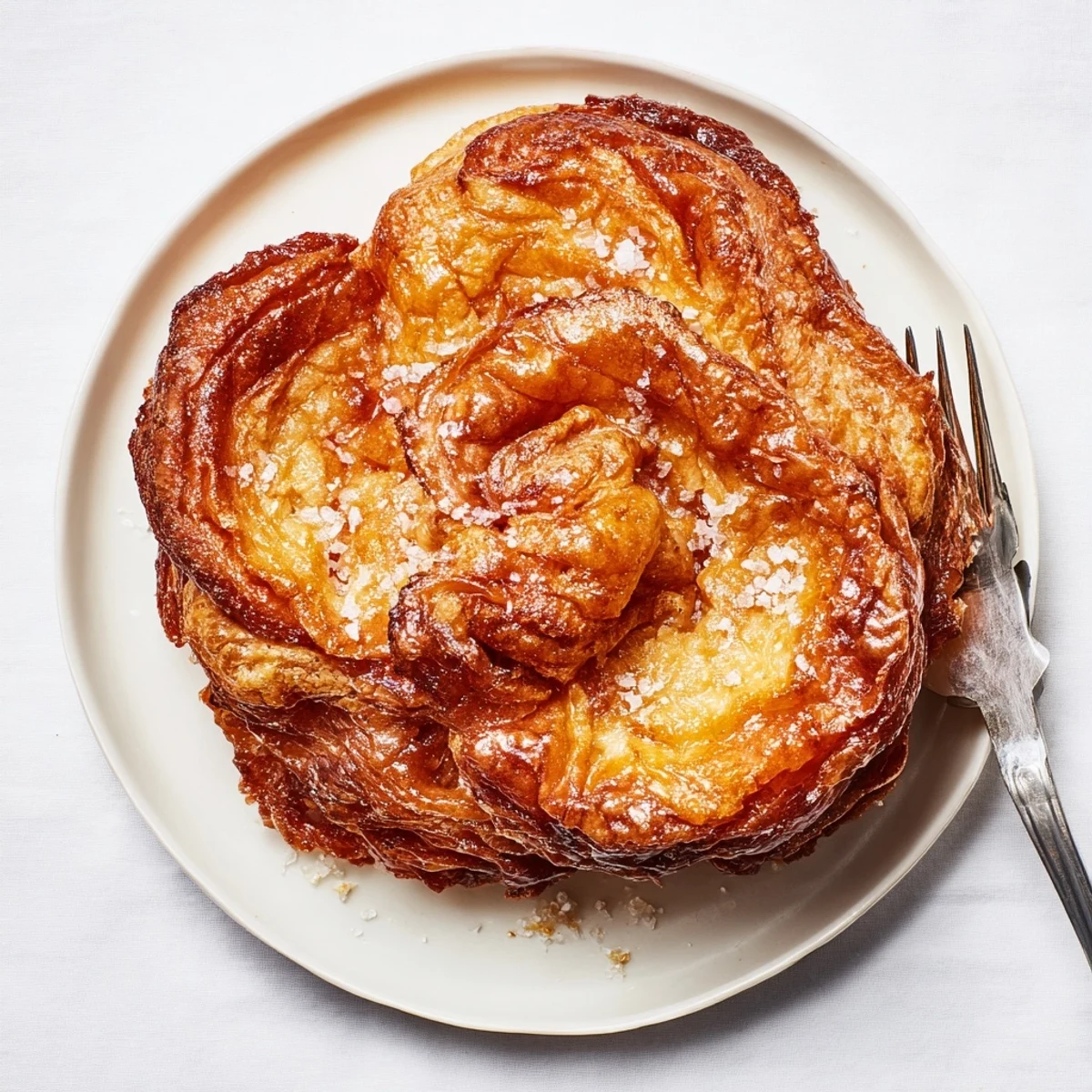
 Save
Save Kouign Amann (pronounced 'queen-ah-man') translates to 'butter cake' in Breton, originating from Brittany, France. This extraordinary pastry achieves its signature texture through a unique lamination process incorporating both butter and sugar layers, creating deep caramelization during baking.
The technique involves folding and rolling dough multiple times with sugar, which melts and creates crisp, caramelized edges while maintaining a tender, flaky center. Using European-style butter with higher fat content is essential for achieving authentic results.
The pastry requires patience but rewards with an irresistible combination of sweet, salty, and buttery flavors that have made it beloved worldwide.
The first time I tasted kouign amann in a tiny boulangerie in Cancale, I sat on a harbor wall watching fishing boats come in, wiping butter from my chin with a paper napkin, completely understand why this pastry translates to 'butter cake' in Breton. I spent three years trying to recreate that caramelized crunch at home, burning countless batches before finally understanding that patience matters more than technique.
Last winter, during a snowstorm that kept us housebound for three days, I made six batches of kouign amann while my partner built a fire in the fireplace. We ate them warm from the oven, standing at the counter with snow piling up outside, and agreed that this pastry turns any ordinary morning into something worth celebrating.
Ingredients
- 2 cups all-purpose flour: This forms the foundation of your dough and using fresh flour ensures proper yeast activation
- 1/2 teaspoon fine sea salt: Salt balances the sweetness and enhances the butter flavor throughout every layer
- 1 teaspoon instant dry yeast: Instant yeast works beautifully here without needing activation time
- 2/3 cup lukewarm water: Water that feels slightly warm to your wrist helps the dough rise efficiently
- 7 oz unsalted European-style butter, cold: European butter has higher butterfat which creates those legendary flaky layers and superior flavor
- 1/4 teaspoon fine sea salt: A touch of salt in the butter layer prevents the pastry from tasting too sweet
- 1 cup granulated sugar: This creates the signature caramelized crust and sweet contrast to the buttery dough
- 1 tablespoon unsalted butter: Greasing your pan properly prevents sticking and adds extra buttery flavor to the bottom crust
- 1 tablespoon granulated sugar: Dusting the pan ensures extra caramelization where the pastry touches the surface
Instructions
- Mix the initial dough:
- Combine flour, salt, and yeast in a large bowl, then add lukewarm water and mix until a rough, shaggy dough forms before kneading until smooth and elastic for 5 to 7 minutes
- Let the dough rise:
- Cover your bowl and let the dough rest at room temperature for about an hour until it has doubled in size and feels puffy when touched
- Prepare the butter block:
- Place cold butter between parchment sheets and pound it with a rolling pin until pliable, then roll into a 6-inch square and refrigerate until firm but not rock hard
- Enclose the butter:
- Roll your risen dough into a 12-inch square, place the chilled butter in the center, and fold the dough edges over like an envelope to completely seal the butter inside
- First fold with sugar:
- Roll the dough into a 16 by 8-inch rectangle, sprinkle one third of the sugar evenly over the surface, then fold into thirds like a letter and roll again
- Second fold with sugar:
- Sprinkle another third of the sugar over your dough, fold into thirds again, roll out once more, then give the dough a 90-degree turn before the final fold
- Final fold and chill:
- Sprinkle the remaining sugar, complete the third fold, wrap the dough tightly, and refrigerate for 30 minutes to let the gluten relax
- Prepare your pan:
- Butter a 9-inch round cake pan thoroughly, then sprinkle sugar inside to coat the bottom and sides completely
- Shape the pastry:
- Roll the chilled dough into a 14-inch circle, fold edges inward to form a rough square, then turn it seam-side down and gently press it into your prepared pan
- Final rise:
- Cover the pan loosely and let the dough rest at room temperature for 30 to 45 minutes until slightly puffy
- Bake until deeply golden:
- Bake at 400°F for 30 to 35 minutes until the pastry is deep brown and caramelized, tenting with foil if the top browns too quickly
- Cool and serve:
- Let the kouign amann cool in the pan for exactly 5 minutes, then immediately invert onto a wire rack to prevent the caramelized bottom from sticking
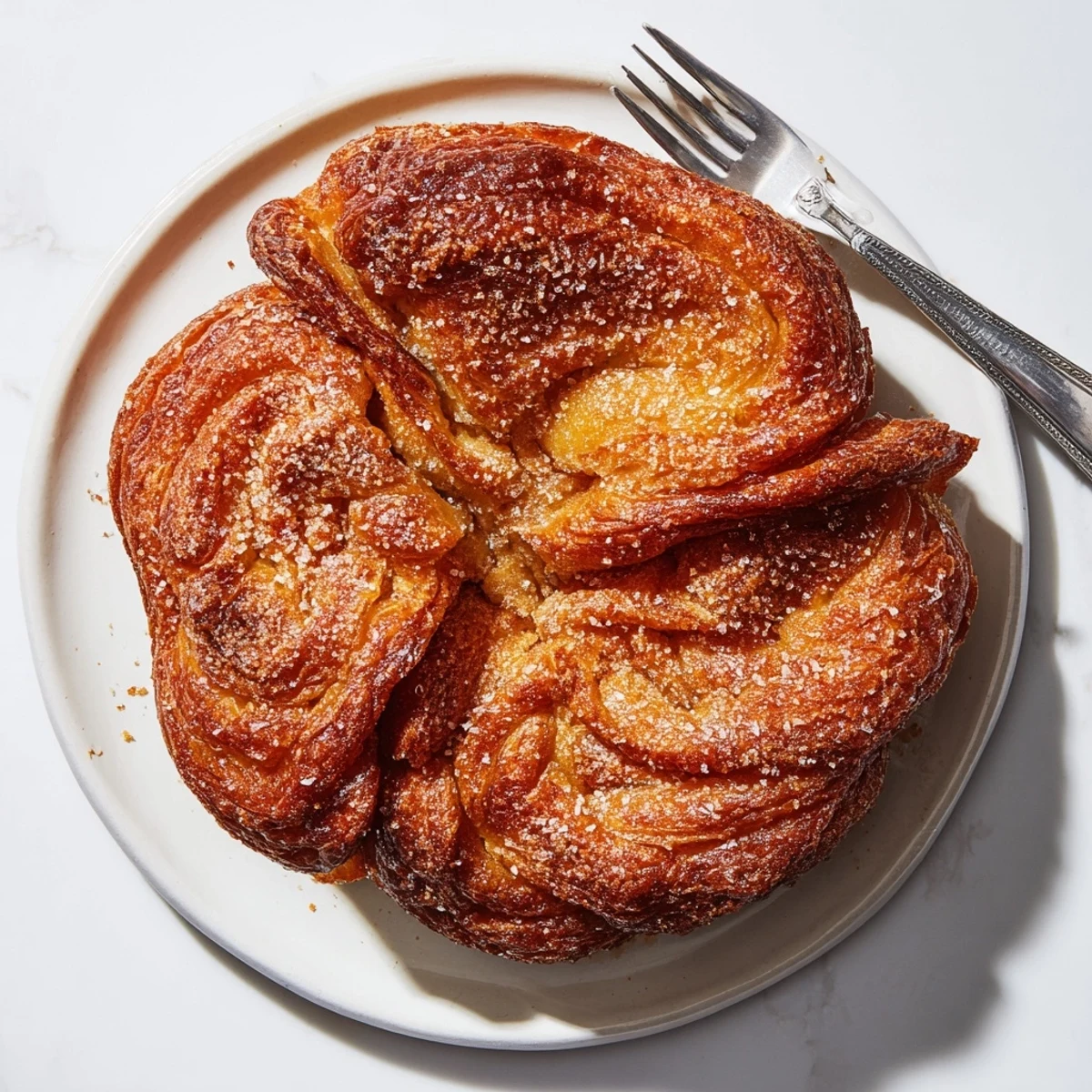 Save
Save My niece called me from her college dorm last month, breathless with excitement about finally mastering kouign amann after watching my failed attempts over FaceTime for months. She sent me a photo of her golden, caramelized masterpiece and I swear I could smell the butter through the phone.
Understanding the Lamination Process
The magic of kouign amann happens during lamination when cold butter gets folded between layers of dough. Each roll and fold creates hundreds of microscopic butter sheets that steam in the oven, generating those signature flaky layers. Working with properly chilled butter and dough makes all the difference between distinct layers and a greasy, dense pastry.
The Sugar Caramelization
Sugar does triple duty here, sweetening each layer while creating deep caramelization where it contacts hot pan surfaces and forming that signature crunchy exterior. The combination of sugar folded inside the dough and dusted in the pan creates two different caramelized textures that make each bite interesting. Dark brown spots are not only normal but absolutely desired for authentic flavor.
Serving and Storage
Kouign amann reaches its absolute peak when served warm within an hour of baking, though the texture remains remarkable for several hours. The pastry loses some of its signature crunch overnight but can be refreshed in a 350°F oven for 5 to 7 minutes.
- Never store kouign amann in the refrigerator as cold air makes the caramelized layers soft and soggy
- Freeze unbaked laminated dough wrapped tightly in plastic for up to one month, then thaw overnight before the final rise
- Reheat day-old pastries in a 375°F oven for 8 minutes to restore some of the original crispness
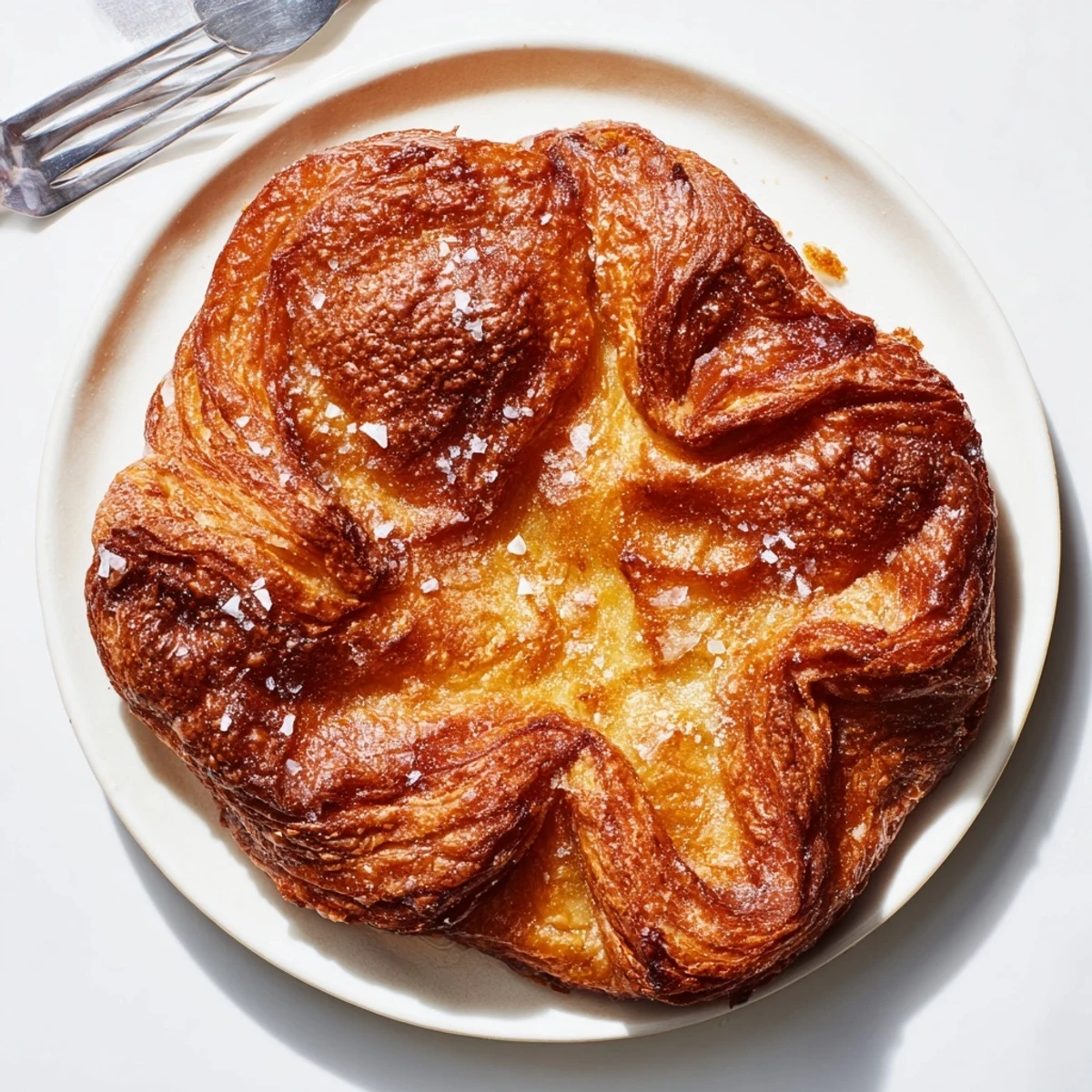 Save
Save There is something profoundly satisfying about pulling a perfectly caramelized kouign amann from the oven, the scent of butter and toasted sugar filling the kitchen like a warm embrace.
Recipe FAQs
- → What does Kouign Amann mean?
-
Kouign Amann means 'butter cake' in Breton, the Celtic language spoken in Brittany, France. The name perfectly describes this rich pastry's primary ingredients: butter and wheat flour.
- → How is Kouign Amann different from croissants?
-
While both use laminated dough, Kouign Amann incorporates sugar between layers during folding, creating intense caramelization. The dough contains less fat than croissant dough but achieves similar flakiness through sugar caramelization during baking.
- → Can I make Kouign Amann ahead of time?
-
Best enjoyed fresh the same day for optimal texture. The laminated dough can be prepared and refrigerated overnight before the final rise and baking. Leftovers can be gently reheated to restore crispness.
- → Why use European-style butter?
-
European butter has higher butterfat content (82%+) compared to American butter (80%), creating superior lamination and richer flavor. The lower moisture content prevents dough from becoming soggy during folding.
- → How do I know when it's done baking?
-
The pastry should be deep golden brown with visible caramelized sugar edges. The center should feel set when gently pressed. Total baking time typically ranges 30-35 minutes at 400°F.
- → What if my dough becomes too warm during lamination?
-
Refrigerate for 15-20 minutes whenever butter begins to soften or ooze. Keeping dough cold ensures proper lamination and prevents butter layers from melting into the dough structure.