
 Save
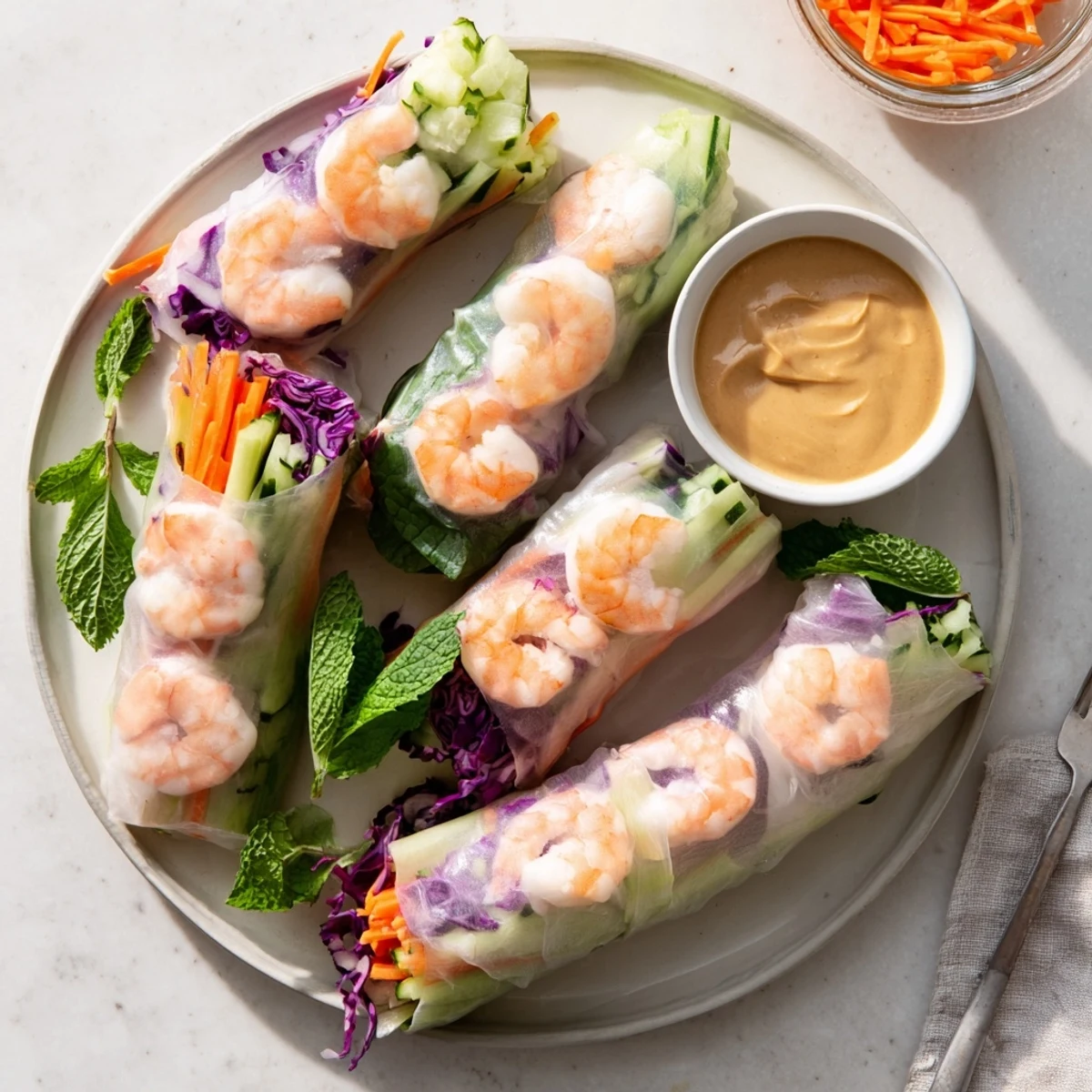
Save These vibrant Thai-inspired rolls combine succulent shrimp with crisp julienned vegetables and fragrant herbs like mint, cilantro, and Thai basil. Wrapped in delicate rice paper for a satisfying crunch, they're paired with a rich, tangy peanut sauce that perfectly balances savory, sweet, and bright citrus notes. The assembly process is straightforward once you master the rice paper technique—just dip, fill, fold, and roll. Make them ahead for entertaining or customize with your favorite vegetables for a fresh, light appetizer or meal that's naturally dairy-free and packed with protein.
The first time I attempted summer rolls, I ended up with more rice paper stuck to my counter than actually rolled into anything edible. My friend Anna just laughed and showed me how to work quickly and confidently with these delicate wrappers. Now these Thai shrimp rolls have become my go-to for dinner parties, because they look impressive but come together in a peaceful rhythm once you get the hang of it.
Last summer I made these for a rooftop gathering, and I swear the peanut sauce vanished before anyone even touched the rolls. My brother-in-law kept sneaking back to the kitchen with a fork, just dipping it straight into the bowl. Now I double the sauce recipe automatically, because Ive learned the hard way that running out is basically a dinner party tragedy.
Ingredients
- 16 large shrimp, peeled and deveined: Buy the biggest ones you can find, they look so beautiful sliced in half through the translucent rice paper
- 1 teaspoon sesame oil: This gives the cooked shrimp that gorgeous sheen and subtle nutty aroma
- Pinch of salt: Just enough to wake up the shrimp is natural sweetness
- 1 small carrot, julienned: The crunch factor is non-negotiable here, cut these into thin matchsticks
- 1/2 cucumber, julienned: English cucumbers work best because they have fewer seeds and stay crispier
- 1 cup shredded red cabbage: This adds the most stunning purple contrast against the pink shrimp and green herbs
- 8 fresh lettuce leaves: Butter lettuce creates a soft base that holds everything together beautifully
- 1/2 cup fresh mint leaves: Dont be shy with the mint, it is what makes these taste distinctly Thai
- 1/2 cup fresh cilantro leaves: Tear the larger leaves so they distribute evenly through each roll
- 1/4 cup fresh Thai basil leaves: If you can find this, it adds this amazing anise-like perfume that regular basil cannot match
- 8 rice paper wrappers: Keep these dry until you are ready to dip, they turn into a gloppy mess if they sit wet too long
- 1/3 cup creamy peanut butter: Natural peanut butter gives the best authentic flavor, but regular works fine too
- 2 tablespoons soy sauce: This provides the salty backbone that balances all that creamy peanut butter
- 2 tablespoons lime juice: Fresh squeezed makes all the difference here, bottled cannot compete
- 1 tablespoon hoisin sauce: This adds that subtle sweetness and depth that restaurant sauces have
- 1 tablespoon honey or brown sugar: Just enough to round out the sharp edges of the lime and soy
- 1 teaspoon grated fresh ginger: Grate this directly into the sauce so you do not lose any of those flavorful juices
- 1 garlic clove, minced: One clove is plenty, you want a hint of garlic, not an overwhelming punch
- 2-3 tablespoons warm water: Add this gradually until the sauce reaches your perfect consistency
Instructions
- Cook the shrimp just right:
- Bring a small pot of salted water to a gentle boil and drop in the shrimp for just 2 to 3 minutes until they turn pink and opaque. Drain them well, pat them dry with paper towels, then toss with sesame oil and a pinch of salt. Slice each shrimp in half lengthwise so they lay flat in the rolls.
- Set up your filling station:
- Arrange all your vegetables and herbs on a large platter or cutting board so everything is within easy reach. Having everything prepped and organized makes the rolling process so much smoother.
- Whisk up that incredible sauce:
- In a small bowl, combine the peanut butter, soy sauce, lime juice, hoisin, honey, ginger, and garlic. Whisk until smooth, then add warm water one tablespoon at a time until it reaches a dippable consistency.
- Soften the rice paper:
- Fill a large shallow dish with warm water and dip one rice paper wrapper for 10 to 15 seconds until it is pliable but not falling apart. Lay it flat on a damp kitchen towel, smoothing out any wrinkles.
- Layer the fillings:
- Place a lettuce leaf in the lower third of the wrapper, then add small amounts of cabbage, carrot, cucumber, and a few herb leaves. Arrange 4 shrimp halves on top with the pink side facing down so they show through the translucent wrapper.
- Roll it up tight:
- Fold the bottom of the wrapper over the filling, fold in the sides like a burrito, then roll forward tightly. Place the finished roll on a plate and repeat with the remaining ingredients.
 Save
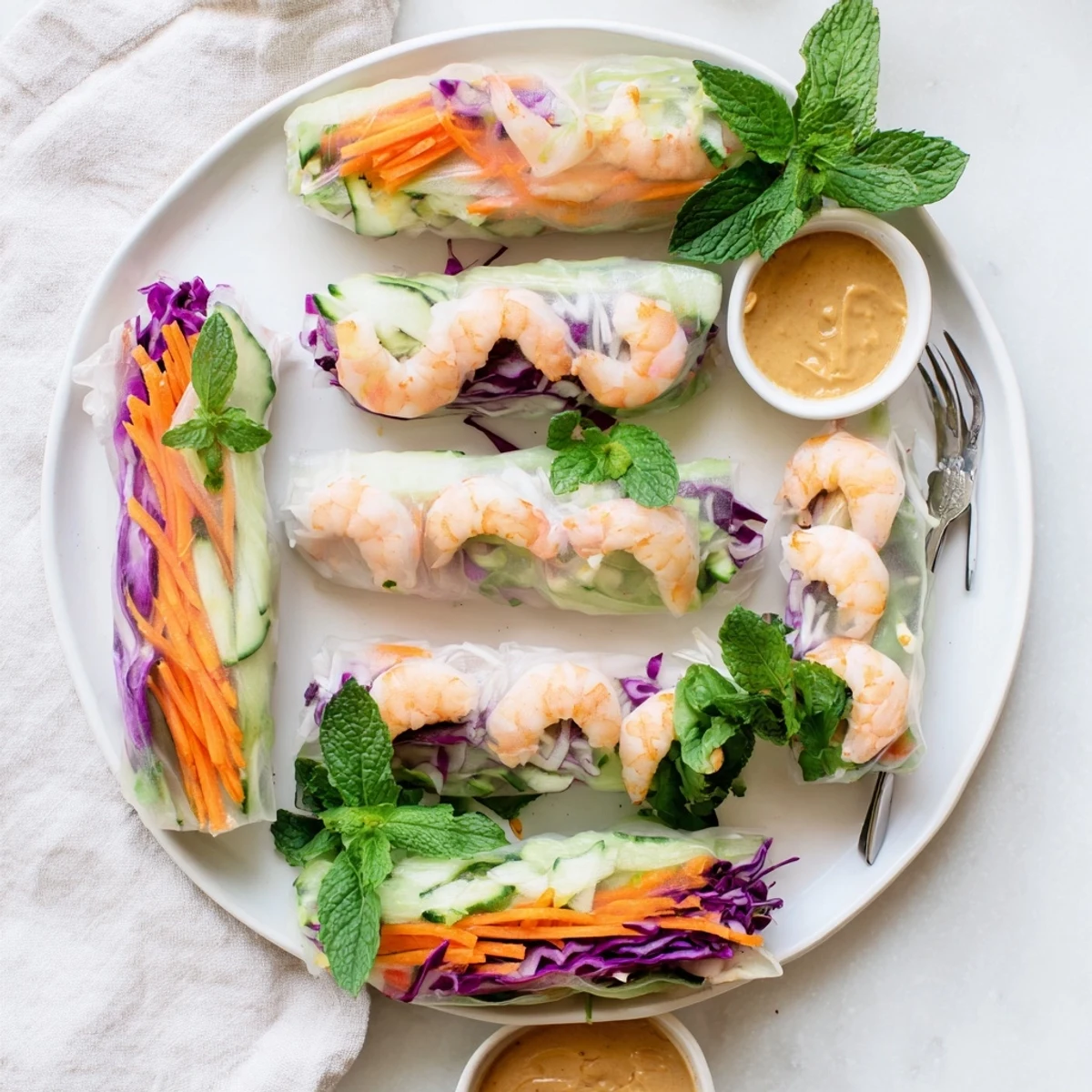
Save These rolls have become my absolute favorite thing to bring to potlucks because they are so different from the usual pasta salads and dips. People always ask for the recipe, and I love watching their faces light up when they take that first dip into the peanut sauce.
Getting the Rice Paper Right
The biggest mistake I see with rice paper is either soaking it too long or not long enough. You want it pliable like a soft towel, not dissolving like wet tissue paper. I keep a damp kitchen towel under my work surface, which prevents the wrappers from sticking and makes rolling so much easier.
Perfecting the Peanut Sauce
Restaurant peanut sauce always tastes better because they let the flavors meld together. If you have time, make the sauce a few hours ahead and let it sit at room temperature. The garlic and ginger really bloom into the peanut butter, creating that deep, complex flavor you get at Thai restaurants.
Make-Ahead Strategy
These rolls are actually perfect for prep, you just need to be smart about the assembly. I julienne all the vegetables and mix the sauce up to a day ahead, storing everything separately in the fridge. Then right before serving, I have a little rolling party while guests arrive with drinks in hand.
- Place a damp paper towel over finished rolls to keep them from drying out
- Cover the sauce with plastic wrap pressed directly onto the surface to prevent a skin from forming
- Store any leftover components separately and assemble fresh the next day for the best texture
 Save
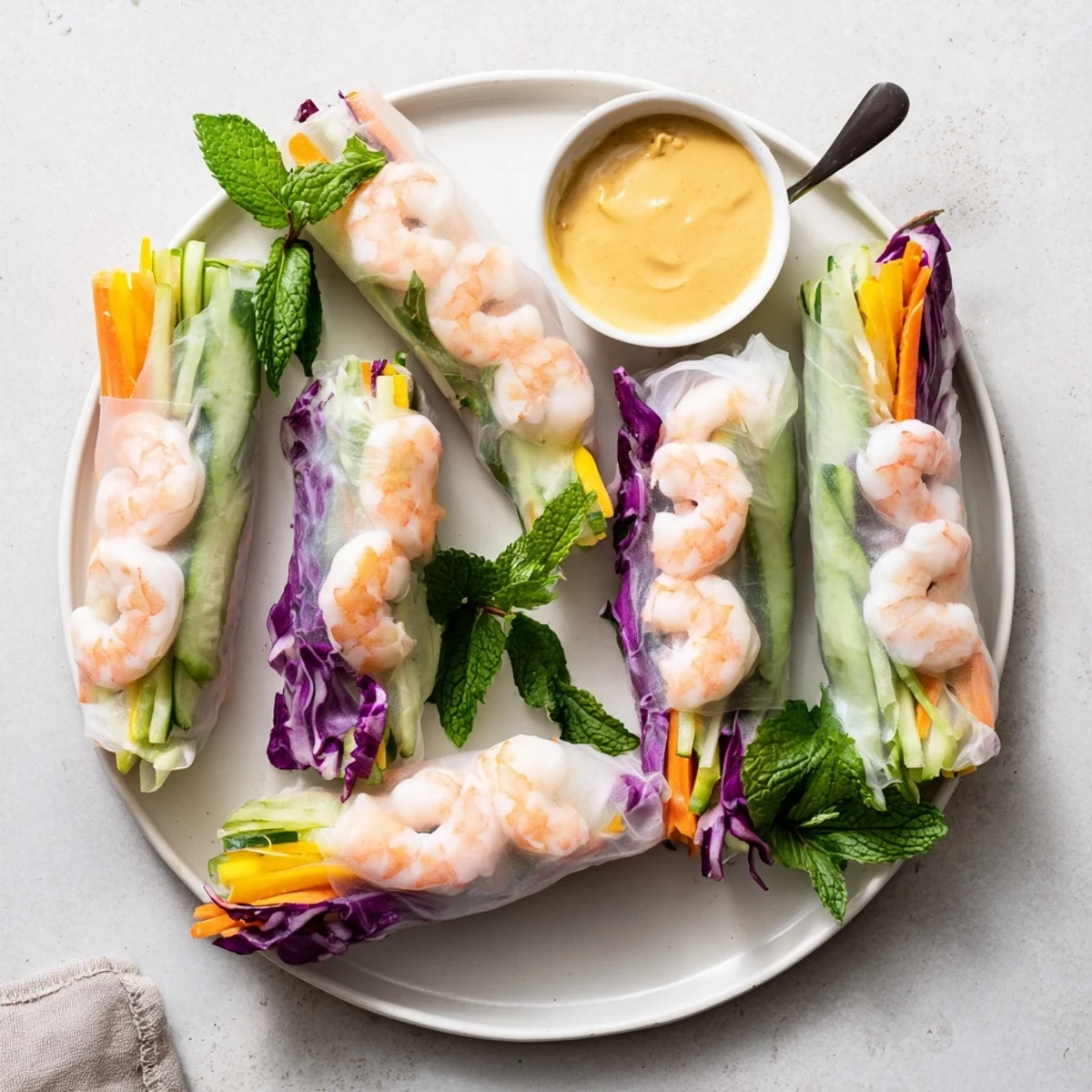
Save There is something so satisfying about eating food that is both beautiful and refreshing, especially when it comes together with such minimal cooking. These rolls never fail to make me feel like summer is possible, even in the middle of February.
Recipe FAQs
- → How do I prevent rice paper from tearing?
-
Soak rice paper wrappers in warm water for only 10–15 seconds until pliable but not overly soft. Lay them on a damp towel while assembling to prevent sticking and tearing. Don't oversoak or they'll become too fragile to handle.
- → Can I make these ahead of time?
-
These rolls are best served immediately for optimal texture. However, you can prep all ingredients ahead and assemble just before serving. If you must make them in advance, wrap each roll individually in damp paper towels and plastic wrap, then refrigerate for up to 4 hours.
- → What's a good substitute for shrimp?
-
Grilled chicken strips, baked tofu, or shredded cooked pork work beautifully as protein alternatives. For a vegetarian version, use extra vegetables like bell peppers, bean sprouts, or avocado slices to maintain the substantial texture.
- → How can I make the peanut sauce thinner or thicker?
-
Add warm water one tablespoon at a time to reach your desired consistency for dipping. If the sauce becomes too thin, whisk in additional peanut butter. The sauce should easily coat a spoon while still dripping off slowly.
- → What other herbs can I use?
-
Fresh Thai basil adds authentic flavor, but sweet basil works in a pinch. Fresh mint and cilantro provide classic brightness. For variation, try adding fresh Vietnamese cilantro, perilla leaves, or even shredded green onions for extra aromatic depth.
- → Are these rolls gluten-free?
-
Most rice paper wrappers are naturally gluten-free. However, check labels as some brands may include wheat. For the sauce, ensure your soy sauce and hoisin are certified gluten-free versions, or substitute with tamari and coconut aminos.