
 Save
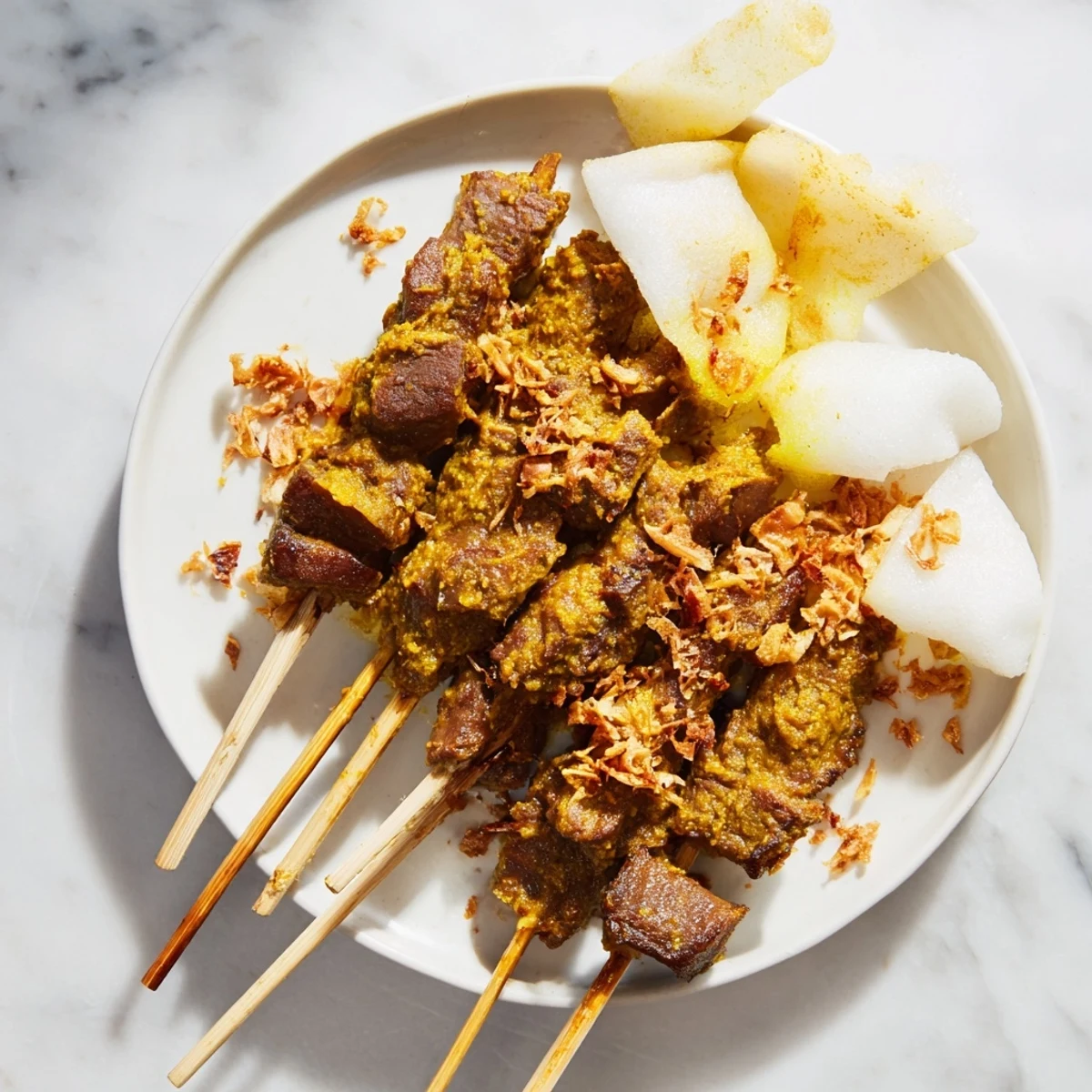
Save These tender beef skewers feature a vibrant spice blend of coriander, cumin, turmeric, ginger, and galangal, creating the distinctive flavors of West Sumatran cuisine. The beef is first simmered until meltingly tender, then grilled over charcoal for a smoky char, and finally drenched in a thick, golden sauce that balances heat with subtle sweetness. Perfect with compressed rice cakes and a scattering of crispy fried shallots.
The first time I encountered Sate Padang was at a bustling night market in Jakarta, where the charcoal smoke mingled with aromatics I couldn't quite place. The vendor handed me skewers dripping with this thick, golden sauce, and one bite told me this wasn't like any satay I'd known before. Now my tiny apartment balcony becomes my personal Padang stall whenever the craving hits, neighbors peeking over the railing to investigate what smells so incredible.
Last summer, my friend Marco came over for what he thought was 'regular' satay and ended up sitting on my kitchen floor for an hour, refusing to leave until I wrote down every single step. The spice paste alone transformed his entire understanding of what grilled beef could be. Now he texts me photos every time he attempts it, always asking if his sauce looks quite right.
Ingredients
- 600 g beef brisket or shank: These cuts have the perfect marbling and connective tissue that breaks down beautifully during boiling, becoming meltingly tender without falling apart during grilling
- 2 lemongrass stalks, bruised: Bruising releases the essential oils that perfume the boiling broth, giving the beef its subtle citrusy foundation before it even meets the spice paste
- 6 shallots: Indonesian shallots are sweeter and more delicate than what you typically find in supermarkets, creating a milder aromatic base that doesn't overpower the other spices
- 2 candlenuts or macadamia nuts: These act as the traditional thickener and add a subtle buttery richness that makes the sauce feel luxurious rather than just spicy
- 1 tsp ground white pepper: White pepper provides a clean, sharp heat that cuts through the rich sauce without adding the visual specks of black pepper
- 2 tbsp rice flour: This is the secret to that authentic Padang sauce consistency, thickening without making things gloopy the way cornstarch sometimes can
Instructions
- Simmer the beef to perfection:
- Combine your beef cubes with water, bay leaves, kaffir lime leaves, bruised lemongrass, and salt in a large pot. Let it bubble gently for 45 to 60 minutes until fork tender, then lift out the beef while saving every drop of that precious stock.
- Build your spice paste:
- Blend shallots, garlic, seeded chilies, candlenuts, coriander, cumin, turmeric, ginger, galangal, and white pepper until absolutely smooth. This paste is the heart of your dish, so take your time getting it right.
- Give the beef its char:
- Thread those tender beef cubes onto soaked bamboo skewers and grill over hot charcoal or a screaming hot grill pan for 4 to 6 minutes. Turn them frequently and brush with a little oil until each piece wears that beautiful smoky char.
- Transform the paste into sauce:
- Heat oil in your saucepan and sauté the spice paste until it turns fragrant, about 3 or 4 minutes. Pour in 400 ml of that reserved beef stock along with salt and sugar, then let everything come to a gentle simmer.
- Thicken to perfection:
- Mix rice flour with a splash of water until smooth, then drizzle it into your bubbling sauce while stirring constantly. Keep going for 3 to 4 minutes until the sauce thickens into that glossy consistency that makes Sate Padang so distinctive.
- Bring it all together:
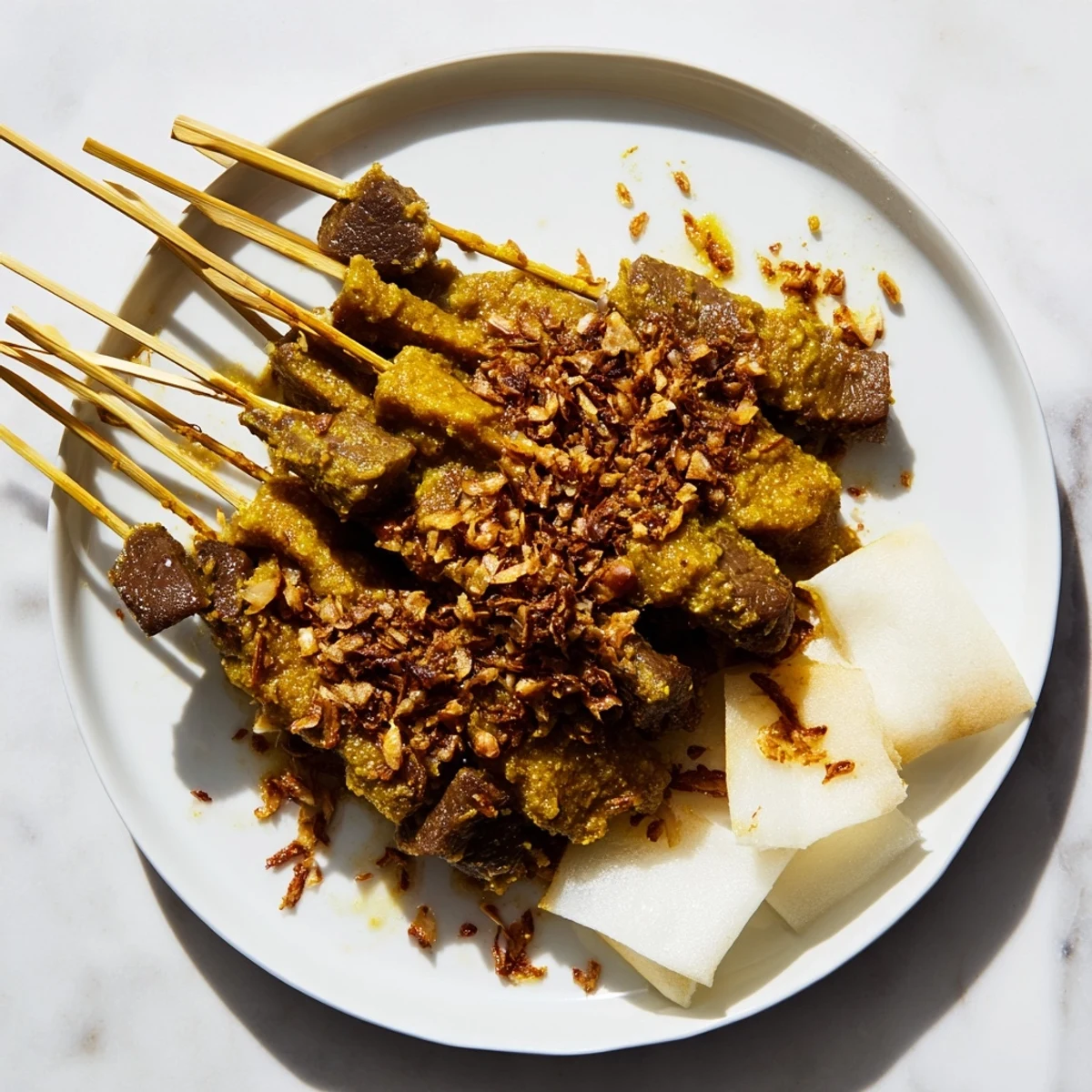
- Arrange those gorgeous skewers on a plate and drench them with hot sauce. Scatter fried shallots over everything and serve with sliced rice cake if you want the full authentic experience.
 Save
Save My auntie in Padang would sit on her front steps making skewers while telling stories, her hands moving so fast I could barely follow. She said the secret wasn't in any ingredient but in the patience you give the sauce. Last night I found myself taking that same slow approach, watching the sauce bubble and thinking of her, and the dish finally tasted like home.
Getting The Beef Texture Right
I learned through disappointing failures that rushing the boiling step leaves the beef tough and chewy. The meat needs that full hour to break down completely, becoming tender enough that a skewer slides through without resistance but still holds its shape on the grill.
Mastering The Spice Paste
A good blender is your best friend here, but I've made this work with a mortar and pestle when power went out during a storm. The paste should be absolutely smooth with no discernible chunks, because texture matters in a sauce that's meant to coat every bite evenly.
The Art Of Sauce Consistency
Your rice flour slurry must be cold when you add it to hot sauce, or you'll end up with unappetizing lumps. Drizzle it in a thin stream while whisking constantly, and remember the sauce will continue thickening as it stands, so stop slightly earlier than you think you should.
- Always taste your sauce after thickening, as the rice flour can slightly mute the spices
- If your sauce becomes too thick, add a splash more stock to reach that pouring consistency
- The sauce keeps beautifully for days and actually develops deeper flavor overnight
 Save
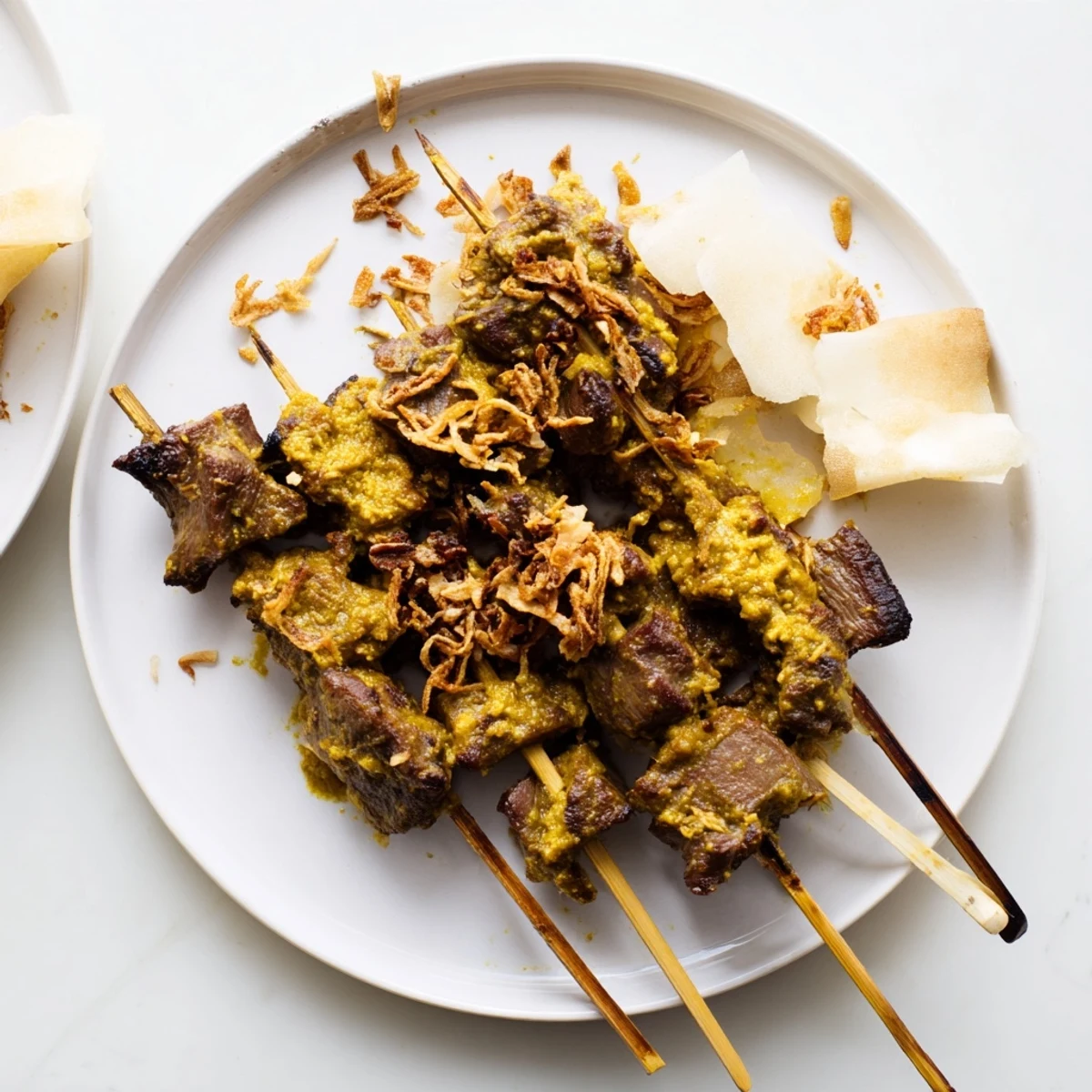
Save There's something deeply satisfying about pouring that thick golden sauce over charred skewers, watching it pool and coat every surface. This dish has become my go-to for introducing friends to Indonesian cooking, because one bite explains everything words cannot.
Recipe FAQs
- → What cut of beef works best for Sate Padang?
-
Beef brisket or shank are ideal choices because they contain connective tissue that breaks down during boiling, resulting in tender, succulent meat that won't dry out on the grill.
- → Can I grill the skewers without charcoal?
-
Yes, a grill pan or indoor grill works well. Cook over medium-high heat for 4–6 minutes, turning frequently to achieve an even char on all sides.
- → How do I adjust the spice level?
-
Reduce the number of red chilies in the spice paste for milder flavor, or increase them for more heat. Removing the seeds also helps moderate the spiciness.
- → What can I substitute for candlenuts?
-
Macadamia nuts or cashews make excellent substitutes, providing the same rich, creamy texture that thickens the sauce naturally.
- → Is lontong essential for serving?
-
Lontong (compressed rice cakes) is traditional but optional. Steamed jasmine rice or even warm flatbreads work wonderfully as alternatives to soak up the sauce.
- → How long will the sauce keep in the refrigerator?
-
The spiced sauce stores well in an airtight container for 3–4 days. Reheat gently with a splash of water or stock to restore the creamy consistency.